Reporting
Over the past three years, I’ve figured out a system of going about a story, particularly one with interviews, that works best for me. Below are the series of steps I follow, although I’ve become more flexible with them over time as I’ve become more confident as an interviewer and writer.
Step 1: Find a story
Pitches, and coming up with ideas, are where I often struggle the most, but I’ve gotten better at recognizing potential stories and the angle I might want to take with them. When coming up with ideas, there are a few key questions I try to ask myself. Is the story relevant to our audience (mainly students)? What angle am I trying to pursue? I also ask these of other staffers when looking at their pitches.


The photo on the far left is one of my pitches for the second issue of the newsmagazine. The middle photo shows my pitch for an editorial about mental health representation in the media for my menu, a monthly choice assignment. On the far right are my notes after going through other staffer’s menu pitches and deciding which ones worked/needed to be rethought, one of the parts of my job my sophomore year.

Step 2: Contact stakeholders
Once I know the story I’m going to write, the first thing I always do is reach out to stakeholders. I've found that it's better to have sources lined up and have to research fast than get ghosted by a stakeholder a few days before the deadline. In my interview requests, which are usually over email or in person, I always include details about what the topic of the story is and what the general focus of the interview will be to help prepare stakeholders without boxing myself in too much.

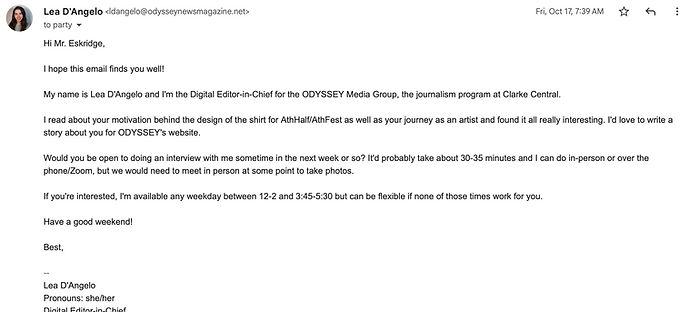
The photo on the top shows my interview request to a new teacher in the school to be a part of our annual New Teacher Package. The photo on the bottom is of my request to a stakeholder in the community who I had done some preliminary research on before approaching him for an interview to write a profile.
Step 3: Research
There are some stories where I’m dependent on my interview with an expert source to gain the information I need, especially for community and school-based stories. But I try to be as knowledgeable as I can independently of stakeholders so I’m not letting their voice influence my own, especially for subject-based stories. This stage often includes looking at past news articles on the topic, as well as scientific studies or further information on sources.


The photo on the top left shows research I did for an editorial on gender equality in sports. The one on the top right is of my notes from watching Board of Education meetings and going through news articles to prepare for an editorial. The bottom photo shows research I did for an interview with a local teen radio program coordinator and longstanding member of the community. The notes on the bottom right are ones my team took when first starting our story on a local nonprofit.
Step 4: Interviewing
Interviewing isn’t something that comes naturally to me, but I’ve developed systems for myself to ensure they go as smoothly as possible, leaving my questions and concepts fairly broad. By leaving things open, I’ve not only forced myself to learn how to think on the spot, but also give myself room to let the interviews guide the angle of the story, as I’ve found follow-up questions often lead to something far more interesting than the story I pitched.
Concepts and questions


The top two photos show my interview concepts for person-focused stories, the left a physical education teacher and coach at my school and the other a local artist, both which I tried to be a bit more detail-oriented with since I had a fair amount of background on both going in. The bottom photo shows my transcription from an interview I did with a counselor at my school about an upcoming event.
Cycle reflection
At the end of every production cycle, everyone on staff writes a reflection on their interviews from the past six weeks. In mine, I try to focus on process over product, looking at what I could have done differently before and during the interview to potentially get a better product, quotes and information for my stories. Through these reflections, I’m able to reflect on what went wrong and what steps I can take to do better in the future.
Step 5: Outlining
While I don’t always follow a strict outline, especially with smaller stories, I’m someone who needs to have an idea of how I’m going to structure my story before I start writing it, including what purpose my quotes will serve and what key points I may want to include in the story.


The photo on the left shows the structure I wanted to follow for an event coverage I was doing, where I knew I needed a plan to be efficient in getting the piece written. The one on the top right is a chart I did with some other staffers to figure out what the most necessary facts of our story were. The bottom right photo shows my outline for an editorial about my district’s board of education, made up of the purpose behind the quotes I had gathered as well as certain pieces of information I wanted to use.
Step 6: Fact-checking
I always try to get as much of the fact checking done during my interviews as possible, but there are times where I forget a question or realize I need a detail I didn’t get later on in the process. In these instances, I often send the stakeholder a quick email and follow up with them in-person if they don’t answer within a few days.


The photo on the left shows a question I sent to a student following our interview about his experience in an internship. The photo on the right shows a follow-up question I had for a teacher about the specifics of his past positions, information I wasn’t able to find online.